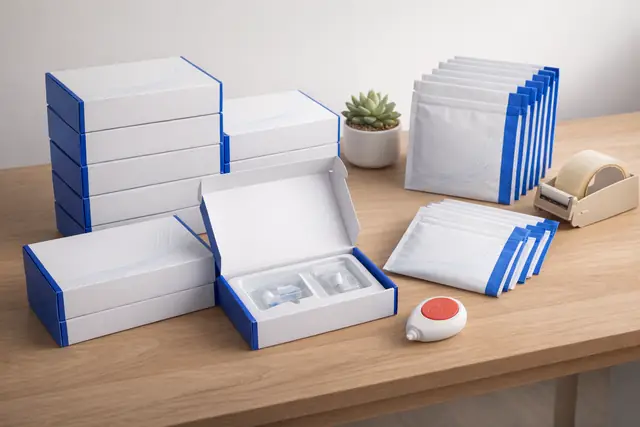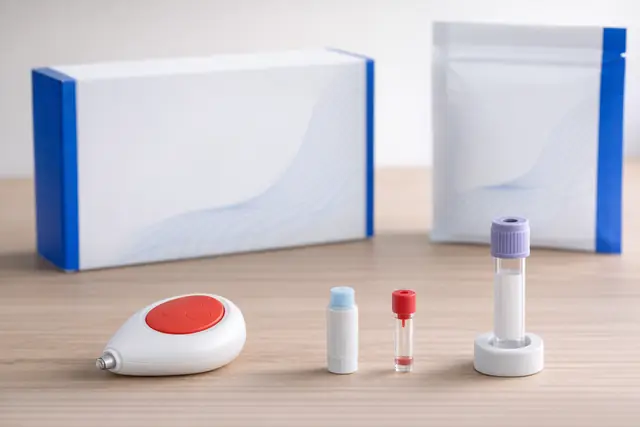


The best lab testing company for a supplement brand depends on how you sell online. Spot Dx connects branded kits to an existing Shopify, WooCommerce, Wix or Squarespace store. Junction is an API for brands with their own app. SiPhox Health and Choose Health sell kits to resell, imaware runs platform-priced programs, and Karpa Health supplies a storefront with Labcorp draws.
Disclosure: Karpa Health is the publisher and one of the six options below. Alphabetical order is used, so placement is not a recommendation. Facts about other companies come from their public pages, docs and press, last checked November 2026; unpublished details are marked as such. Confirm terms with each vendor. For the broader field, see our white label lab testing companies roundup.
How Does Lab Testing Fit a Supplement Brand’s Funnel?
For a supplement brand, a lab test usually plays one of three roles:
- An entry product. A customer buys a panel, sees their numbers, and stays in your email list and community.
- A retest loop. A customer who takes a product for months may want to check the same biomarkers again; a scheduled retest gives your brand a reason to stay in touch.
- A bundle. A test sold alongside a supplement subscription, priced as one offer.
Each role puts different demands on the vendor: whether the test fits in your existing checkout, whether kits ship nationwide, and whether retesting can be scheduled or sold as a subscription. Because a brand cannot order lab tests itself, every vendor on this list supplies the ordering physicians or clinicians; our guide on who can order lab tests explains why that is required.
What Can You Say About Results? The FTC Rules
This is the part supplement brands most need to get right, because the test and the product sit next to each other.
The FTC’s Health Products Compliance Guidance, which replaced its 1998 supplement guide, applies to dietary supplements and also names “health equipment, diagnostic tests, and health-related apps.” Points that matter for a test-plus-product offer:
- Claims need competent and reliable scientific evidence, which the FTC describes as tests, analyses, research or studies conducted and evaluated objectively by experts and “generally accepted in the profession to yield accurate and reliable results.”
- The FTC reads the whole ad. It assesses the “net impression” conveyed by all elements of the ad, so a results page that shows a low marker next to a “buy now” button for your product makes a claim even if no sentence says so.
- Structure/function wording can still imply a disease claim, and if it does, “the advertiser must be able to substantiate the implied disease claim.”
- Customer stories are not proof. Surveys of consumer experiences “are never sufficient to substantiate claims about the effects of a health product.”
Separately, telling a customer what a result means for their health is interpreting results, which states reserve for licensed practitioners. Safer patterns: sell the test on what it measures, remind customers when to retest, point them to their own clinician or to a vendor’s clinicians where offered, and keep product marketing on claims you can substantiate on their own. This is general information, not legal advice; have counsel review results-linked messaging.
Quick Comparison
| Company | Who orders | Sample types and collection | Where customers buy | Retail price |
|---|---|---|---|---|
| Choose Health | Choose Health’s physician requisitions | Blood: finger-prick or Tasso kit | Your channels; API and webhooks | You set it (wholesale terms through sales) |
| imaware | imaware’s independent partner clinicians | At-home kit, or Quest or Labcorp center | Branded program; Shopify integration listed | Through sales (setup and platform fees) |
| Junction | Junction’s physician network, or your own | Kits (blood, saliva), mobile draw, Quest, Labcorp or BioReference | Your own app via API | Your checkout; Enterprise plan pricing |
| Karpa Health | Karpa’s independent provider network | Blood: Labcorp draw; branded kit from Dec 1, 2026 | Karpa storefront, your website, or API | You set it; paid to your Stripe |
| SiPhox Health | SiPhox’s physicians | Blood: upper-arm device | Your checkout, after buying kits wholesale | You set it |
| Spot Dx | Spot’s physician network | Blood, urine or saliva kits | Your Shopify, WooCommerce, Wix or Squarespace store | You set it; Spot bills on usage |
Which Vendor Fits Which Brand?
- You sell on Shopify, WooCommerce, Wix or Squarespace and want the test as another SKU: Spot Dx.
- Your product is an app, and you want test results next to wearable data: Junction.
- You want to sell a kit-plus-supplement bundle from inventory you control: SiPhox Health, Choose Health.
- You want a managed program with clinician consultations and HSA/FSA payments: imaware.
- You want a storefront you do not have to build, with payments to your own Stripe: Karpa Health.
- Your test needs urine or saliva: Spot Dx, and Junction for saliva.
- You want to launch with no kit inventory: Choose Health (drop-ship), Karpa Health (Labcorp draws), Spot Dx (usage-based).
The Six Companies, Alphabetically
Choose Health: Branded Kits That Drop-Ship to Your Customers
Choose Health lists supplement providers and wellness brands among its partners, alongside its own consumer tests.
For a supplement brand: Choose Health ships private label finger-prick or Tasso kits straight to the customer in any of the 50 states, so you hold no stock. The box, kit contents, notification emails and results dashboard carry your brand, and panels are built from about 100 biomarkers. Order creation, sample tracking and results run through an API and webhooks, which lets a developer connect kits to your store or customer accounts. Choose Health’s physicians handle requisitions. Wholesale pricing and minimums come from its sales team, and it does not describe a storefront, so the sale happens in your channels. Most partners launch in 2 to 6 weeks, per Choose Health. See Karpa vs. Choose Health.
imaware: A Managed Testing Program With Clinician Support
imaware runs white label testing programs for wellness companies, employers, payors and health systems, and has been owned by SuperTruth since December 2024.
For a supplement brand: imaware suits a brand that wants a full program run for it rather than a kit SKU. Custom panels draw on 200+ analytes, customers can test at home or at one of 4,500+ Quest and Labcorp centers, and independent partner clinicians authorize orders, review results and offer consultations, which gives customers a clinician to ask about their numbers. imaware lists Shopify among the integrations its engineers can add and can process HSA and FSA cards. Its FAQ describes a one-time setup fee, a monthly platform fee, per-user fees, kit fees and clinician support, quoted after a demo. See Karpa vs. imaware.
Junction: Lab Ordering Inside Your Own App
Junction, called Vital until March 2025, sells a lab testing and wearable data API to digital health and consumer wellness companies.
For a supplement brand: Junction fits a brand whose product is already an app, for example one that tracks habits or wearable data. Through one API, your app can order labs, send at-home kits (dried blood spot or saliva), book mobile phlebotomy or walk-in draws at Quest, Labcorp and BioReference, and pull data from 300+ devices such as Oura and Apple Watch. You build the checkout and results experience; Junction’s physician network can sign orders, and it says it does not offer consults or result interpretation. Lab testing sits on a custom-priced Enterprise plan, at-home kits carry a stated 250-kit minimum, and some physician-network orders are unavailable in New York, New Jersey and Rhode Island. See Karpa vs. Junction.
Karpa Health: A Storefront and Retest Subscriptions Under Your Brand
Karpa Health lets a brand sell Labcorp testing as its own product through a ready-made lab storefront, a white-label checkout and patient portal on the brand’s website, or an API.
For a supplement brand: a brand without developers can launch on the storefront and keep its supplement store as is, linking between the two. A licensed provider in Karpa’s independent network orders each test, and labs-only needs no LegitScript certification. Customers book or walk in for a Labcorp draw today, which suits an online audience spread across 47 states plus DC. From December 1, 2026, branded at-home kits, including white-labeled Tasso devices above a minimum order quantity, can be sold as a subscription, such as a quarterly retest. The brand sets the price, payments settle to its own Stripe account, and each lab order carries a $6 collection fee. Results go to the customer’s branded portal; a provider reviews them only if the customer books a TRT or HRT consult, so your messaging should not fill that gap with product advice. Labs-only pricing is shared on a call. See the lab storefront.
SiPhox Health: Wholesale Kits for Bundles
Wellness platforms and coaches appear on SiPhox Health’s partner list, and its co-branded or white label kits collect blood with the EasyDraw device on the upper arm.
For a supplement brand: SiPhox works like any other product you stock. You buy kits upfront at wholesale and sell them through your own checkout at your own price, so a kit can sit in a bundle with a supplement. SiPhox’s articles state a 30-kit minimum to start, volume discounts from 100 kits, and 500+ kits for full white label and custom panels. Its physicians issue requisitions, and partners need no medical credentials. SiPhox describes the service as wellness-only and not diagnostic, which is worth mirroring in your own copy. A REST API covers orders, inventory and results. Kits are not available in Hawaii or New York. See Karpa vs. SiPhox Health.
Spot Dx: Kits as a SKU in Your Existing Store
Spot Dx names personalized product companies, including supplements, among its customers, and also serves brands running efficacy studies.
For a supplement brand: Spot plugs into the store you already run. Customers pay on your Shopify, WooCommerce, Wix or Squarespace site at your price, the paid order reaches Spot by webhook or API, Spot ships a branded blood, urine or saliva kit, and Spot bills you on usage with no upfront cost. Results come back with normal ranges and what Spot calls medically vetted interpretations, so your team is not the one explaining the numbers. Spot’s physician network, which it says is licensed in all 50 states, handles the doctor’s order where a state requires one, and Spot builds new tests on request. It has no storefront of its own and lists no lab draw option. See Karpa vs. Spot Dx.
Questions to Ask Each Vendor Before You Sign
- Who interprets results for the customer, and what am I allowed to show next to them?
- Can the test be a product in my existing store, and how does a paid order reach you?
- Can I sell retests on a schedule or as a subscription?
- Do I buy kits upfront, and what is the minimum?
- Which states and sample types (blood, urine, saliva) are covered?
- Do I set the price, and whose account receives the payment?
- Can I export results or customer data to my email or CRM tools, and under what consent?
A Worked Example: A Quarterly Retest Offer
Say your brand sells a monthly supplement subscription and wants to add testing.
- Pick a panel your claims can stand behind. Choose biomarkers the customer wants to track, and keep product marketing separate from what any single result says.
- Choose collection for an online audience. Kits reach customers without a lab nearby (Choose Health, SiPhox Health, Spot Dx, Karpa from December 1, 2026). A lab draw (Karpa Health, imaware, Junction) suits customers who prefer a venous draw.
- Set the cadence. A baseline test at signup, then a retest every quarter, sold as its own subscription or bundled with the supplement.
- Price it. Your margin per test is your retail price minus the vendor’s per-test or kit cost, any collection fee (Karpa’s is $6 per order) and card processing. See how much to charge for lab tests.
- Write the follow-up. Results emails should point to the customer’s own clinician or the vendor’s clinicians, not to a product recommendation built on the number.
When Karpa Is the Right Fit, and When It Is Not
Karpa Health fits a supplement brand that wants Labcorp testing sold as its own product without building a store or buying kit inventory, priced by the brand with payments into its own Stripe account, and with a path to quarterly kit subscriptions from December 1, 2026. The same brand can add TRT, HRT, GLP-1 or peptide programs later, from $297 a month plus a one-time implementation fee.
Karpa Health is not the right fit when:
- You need kits in customers’ hands before December 1, 2026. Choose Health, SiPhox Health and Spot Dx ship at-home kits now.
- Your panel needs urine or saliva. Spot Dx handles both, and Junction offers saliva kits.
- You want the test to be a SKU inside your current Shopify, WooCommerce, Wix or Squarespace checkout. Spot Dx is built around that.
- You want results explained to every customer. Karpa results reach a provider only when a TRT or HRT consult is booked. Spot Dx returns vetted interpretations, and imaware’s clinicians offer consultations.
- You want DUTCH, Genova or similar specialty kits. Karpa offers Labcorp testing only.
- A meaningful share of buyers live in Hawaii, Maine or North Dakota. No Labcorp patient service center operates there, so Karpa cannot serve those customers.
- You need labs-only storefront pricing in writing before a conversation. Karpa provides it on a call.
How to Choose
Begin with your sales channel: an existing store (Spot Dx), your own app (Junction), resold kit inventory (SiPhox Health, Choose Health), a managed program (imaware) or a ready-made storefront (Karpa Health). Then check sample types, minimums and retest options, and plan your results messaging around the FTC rules above.
For the business setup, see how to start a lab testing business. For kits versus lab draws, see at-home blood collection: Tasso vs. finger-prick vs. lab. For prescription programs, see telehealth platforms for supplement brands.